Maintaining good health in today’s fast-paced life can be challenging. Even when we try to eat well, our bodies don’t always get all the essential nutrients they need. That’s where vitamins & supplements come in. They act as nutritional support to fill the gaps in our diet and improve overall wellness. Whether you want more energy, better immunity, or stronger bones, understanding how vitamins and supplements work can help you make better choices for your health.
In this blog, you’ll learn everything about vitamins and supplements—their benefits, types, functions, recommended intake, and how to choose them safely.
What Are Vitamins & Supplements?

Vitamins are organic compounds that your body needs in small amounts to function properly. They help support immunity, cell growth, energy production, and countless other processes. Supplements, on the other hand, include vitamins, minerals, herbs, amino acids, and other nutrients that people take to improve their overall wellbeing.
Think of supplements as an extra nutritional boost when food alone cannot provide enough.
Common reasons people use supplements include:
Nutrient deficiencies
Low immunity
Fatigue
Poor gut health
Bone weakness
High levels of stress
Fitness and muscle recovery
While supplements are helpful, they are not a replacement for a balanced diet. Instead, they complement it.
Why Vitamins & Supplements Are Important for Good Health

Even if you try to eat a well-balanced diet, factors like pollution, stress, busy schedules, soil nutrient depletion, and processed food consumption can reduce the amount of nutrition your body absorbs. This results in nutrient gaps that can affect your overall health.
Here are some major benefits of taking vitamins & supplements:
1. Boost Immunity
Vitamins such as C, D, and zinc play a crucial role in strengthening your immune system. They help your body fight infections, reduce inflammation, and improve overall resistance to diseases.
2. Improve Energy Levels
B-vitamins, iron, and magnesium help transport oxygen in the body and convert food into energy. If you often feel tired or weak, a deficiency in these nutrients might be the reason.
3. Support Bone Health
Calcium, Vitamin D, and Vitamin K2 are essential for maintaining strong bones and reducing the risk of osteoporosis.
4. Enhance Skin, Hair & Nail Health
Biotin, Vitamin E, collagen supplements, and omega-3 fatty acids improve skin elasticity, hair growth, and nail strength.
5. Brain & Mood Support
Omega-3, Vitamin B12, and magnesium support brain function, memory, and mood regulation. They can help reduce stress and improve overall mental wellbeing.
6. Better Gut Health
Probiotics and digestive enzymes support healthy digestion, nutrient absorption, and a balanced gut microbiome.
Types of Vitamins & Their Functions

There are 13 essential vitamins required by the body. They are divided into two categories:
Fat-Soluble Vitamins
These vitamins dissolve in fat and are stored in the body’s tissues.
VitaminFunction Vitamin A Supports vision, immunity, skin healthVitamin D Helps absorb calcium and supports bone healthVitamin E Protects cells from damage and improves skin healthVitamin K Helps in blood clotting and bone strength
Water-Soluble Vitamins
These vitamins dissolve in water and are not stored long-term, so you need them daily.
VitaminFunction Vitamin C Boosts immunity and aids tissue repair B-Complex (B1–B12)Supports energy, brain function, metabolism
Water-soluble vitamins are easily depleted, which is why many people choose supplements to maintain healthy levels.
Popular Supplements and Their Benefits
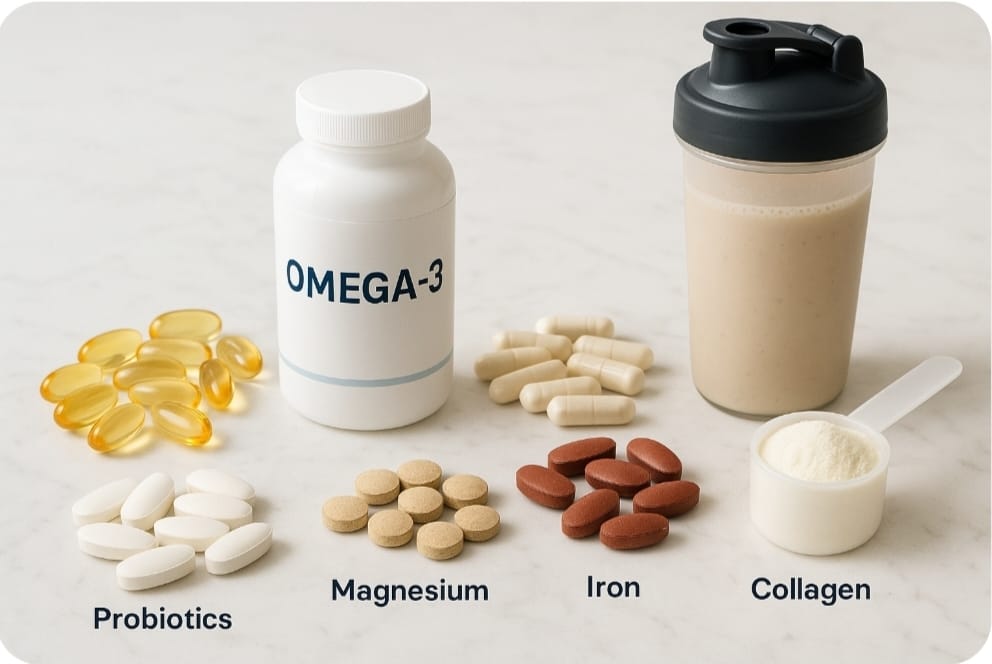
Apart from essential vitamins, several other supplements offer targeted health benefits.
1. Omega-3 Fatty Acids
Found in fish oil or plant-based sources, omega-3 supports heart health, reduces inflammation, and improves brain function.
2. Probiotics
These beneficial bacteria improve gut health, digestion, immunity, and even mood.
3. Magnesium
Supports muscle function, nerve health, sleep quality, and stress reduction.
4. Iron
Essential for transporting oxygen in the blood. Iron deficiency can cause tiredness and low immunity.
5. Calcium
Important for strong bones and teeth. Often paired with Vitamin D for better absorption.
6. Collagen
Supports skin elasticity, joint health, and anti-aging.
7. Protein Supplements
Helps muscle repair, weight management, and overall strength—commonly used by fitness enthusiasts.
Signs You Might Need Vitamins & Supplements

You may benefit from supplements if you experience:
Low energy or chronic fatigue
Frequent illnesses
Hair fall or brittle nails
Muscle cramps
Mood swings or brain fog
Poor appetite
Weak bones or joint pain
Lifestyle factors like stress, lack of sunlight, smoking, and aging also increase your nutritional needs.
How to Choose the Right Vitamins & Supplements
With so many products available, choosing the right supplement can be confusing. Here are some tips:
1. Identify Your Needs
Do you want better immunity? More energy? Improved digestion? Choose supplements based on your health goals.
2. Check Quality and Certification
Select trusted brands that follow safety standards and third-party testing.
3. Look for Natural Ingredients
Avoid supplements with artificial colors, preservatives, or unnecessary fillers.
4. Pay Attention to Dosage
Too much of certain vitamins—especially fat-soluble ones like A, D, E, and K—can be harmful.
5. Consult a Doctor if Needed
If you have medical conditions or take medication, always check before starting supplements.
Are Vitamins & Supplements Safe?
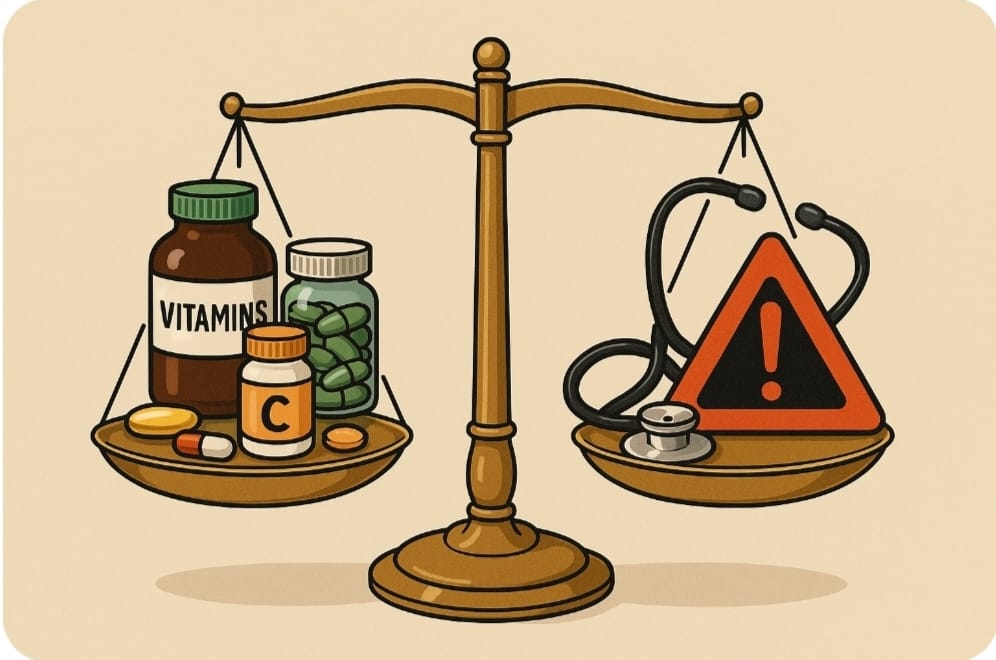
Yes, most supplements are safe when taken in recommended amounts. However, incorrect usage can cause side effects.
Possible Risks Include:
Overdosing
Allergic reactions
Interactions with medication
Never exceed the recommended dose unless instructed by a health professional.
Food Sources vs. Supplements: Which Is Better?

Food should always be your primary source of vitamins and minerals because whole foods provide fiber, antioxidants, and other beneficial compounds.
However, supplements become necessary when:
You have nutrient deficiencies
You follow restrictive diets (vegan, low-calorie, etc.)
You have a poor appetite
You are pregnant or elderly
You live in areas with low sunlight (Vitamin D deficiency)
The best approach is to combine a nutritious diet with targeted supplements.
Daily Vitamin Intake Recommendations
Here are general guidelines (but individual needs may vary):
Vitamin C: 65–90 mg/day
Vitamin D: 600–800 IU/day
Calcium: 1000–1200 mg/day
Iron: 8–18 mg/day
Vitamin B12: 2.4 mcg/day
Omega-3: 250–500 mg/day
Always read labels and follow proper dosage.
Best Time to Take Vitamins & Supplements
Proper timing improves absorption:
Fat-soluble vitamins (A, D, E, K): With meals
Vitamin C: Any time, often morning
B-complex: Morning for better energy
Probiotics: On an empty stomach
Magnesium: At night for better sleep
Tips to Get the Most Out of Your Supplements
Stay consistent
Drink enough water
Combine supplements with healthy meals
Avoid taking everything at the same time
Store them properly to retain freshness
Final Thoughts
Vitamins & supplements play a powerful role in supporting your health—especially when your daily diet falls short. They help boost immunity, increase energy, support brain function, improve bone strength, and enhance overall wellness. However, they should be used wisely, choosing high-quality products and following proper dosage.
A balanced diet, healthy lifestyle, and the right supplements together create the perfect foundation for long-term wellbeing. Always listen to your body and make informed decisions to live a healthier, stronger, and happier life.
Read this :-
- 15+Superfoods Best For Health
- Facebook page :- Dailylife99
FAQ: Vitamins & Supplements
- What are vitamins and supplements?
Vitamins and supplements are products designed to provide nutrients that may not be consumed in enough quantity through food. They include vitamins, minerals, herbal extracts, probiotics, and other nutrition-supporting compounds. - Do I need to take supplements if I eat a healthy diet?
If you have a balanced diet, you may already be meeting most of your nutritional needs. However, some people require supplements due to lifestyle, medical conditions, deficiencies, or increased nutrient demands. It’s best to consult a healthcare professional before starting any supplement. - Can vitamins replace real food?
No. Supplements cannot replace the variety and benefits of whole foods. They are meant to add to your diet, not substitute fruits, vegetables, whole grains, and proteins.
- How do I know which supplement is right for me?
Your ideal supplement depends on your age, health goals, diet, and any deficiencies. A blood test or consultation with a doctor or nutritionist can help you choose the right product. - Are supplements safe to take daily?
Most supplements are safe when taken in the recommended dosage. However, overconsumption of certain vitamins—especially fat-soluble ones like A, D, E, and K—can cause toxicity. Always follow dosage instructions and seek professional guidance. - What should I check on a supplement label?
Look for:
Ingredient list
Dosage and serving size
Third-party testing or certifications
Expiry date
Possible allergens
Reading labels helps ensure product quality and safety.
- Can supplements help with energy and immunity?
Supplements like vitamin C, vitamin D, zinc, B-complex vitamins, and probiotics may support immunity and energy levels. However, benefits vary from person to person and depend on overall lifestyle. - Are herbal supplements effective?
Herbal supplements such as ashwagandha, turmeric, and ginkgo biloba may offer health benefits, but their effectiveness differs based on the quality of the product and individual health needs. Scientific evidence varies, so use them with caution. - Can I take multiple supplements at the same time?
Some supplements work well together, while others may interact or reduce each other’s effectiveness. Avoid taking unnecessary combinations and always check with a healthcare professional. - Do supplements have side effects?
Yes, some supplements can cause side effects like digestive discomfort, headaches, allergic reactions, or toxicity when overused. Always start with the recommended dosage and monitor how your body responds. - Are cheap supplements less effective?
Price does not always reflect quality. However, very low-cost supplements may lack purity, proper testing, or adequate dosage. Choosing reputable brands with good manufacturing practices is important. - How long does it take to see results from supplements?
Results vary depending on the type of supplement and your body’s needs. Some people notice changes in a few weeks, while others may take several months.
Disclaimer :-
© DailyLife99 — The information provided here is for general purposes only. For any kind of health-related issue, please consult your specialist or doctor first. DailyLife99.com does not claim responsibility for any harm or consequences arising from the use of this information.