
Management of Work Stress:- In today’s fast-paced world, work stress has become a common issue for almost every employee. Whether you work in an office, work from home, or freelance—pressure, deadlines, multitasking, and constant competition contribute heavily to stress. If not managed properly, work stress can affect mental, emotional, and physical health.
This is why Work Stress Management is now an essential skill for every professional.
This blog explains in detail the causes, symptoms, effects, and powerful techniques to manage work stress effectively.
1. What is Work Stress?

Work stress occurs when excessive pressure, workplace expectations, tight schedules, and environmental factors create mental or emotional strain.
Over time, this stress may lead to:
Fatigue
Irritability
Anxiety
Low confidence
Health issues
Work stress is not just an emotional challenge; it strongly affects an individual’s productivity and mental well-being.
2. Major Causes of Work Stress

1. Excessive Workload and Time Pressure
Meeting continuous deadlines creates performance stress.
2. Lack of Work-Life Balance
When work occupies all your time, leaving no space for family or relaxation.
3. Job Insecurity or Fear of Losing a Job
High competition creates uncertainty and anxiety.
4. Negative or Toxic Work Culture
Unnecessary pressure from superiors, office politics, or lack of teamwork.
5. Lack of Skills or Resources
Feeling unprepared or unsupported increases stress.
6. Pressure of Technology or Rapid Changes
Adapting to new tools or responsibilities can overwhelm employees.
3. Symptoms of Work Stress
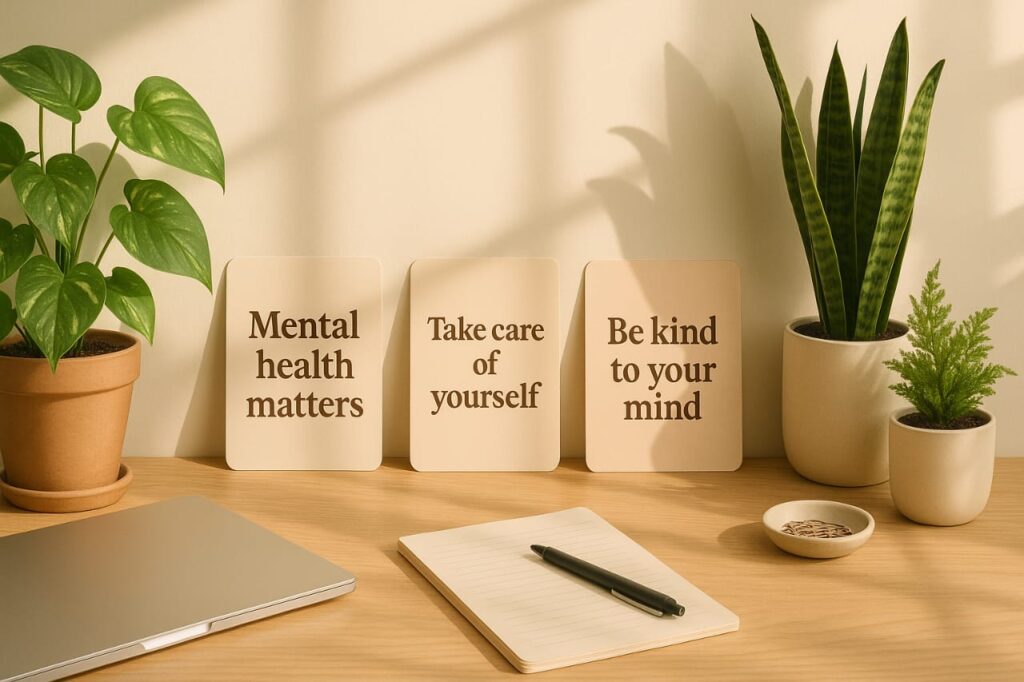
Recognizing early signs helps prevent long-term harm.
Constant tiredness
Irritability or mood swings
Difficulty concentrating
Sleep problems
Headaches or migraines
Appetite changes
Low confidence
Loss of interest in work
4. Effects of Work Stress
On Personal Life:
• Depression
• Anxiety
• High blood pressure
• Risk of heart diseases
• Disturbed relationships
On Professional Life:
• Reduced productivity
• Increase in mistakes
• Lack of motivation
• Burnout
• Poor teamwork
Unmanaged stress can directly affect growth and job performance.
5. Effective Ways to Manage Work Stress

This section highlights powerful, practical, and easy-to-follow stress management methods.
1. Plan Your Day Wisely
Spend 5–10 minutes each morning preparing a priority list.
• Do important tasks first
• Break big tasks into smaller parts
• Stick to one task at a time
• Clear planning reduces confusion and stress.
2. Learn Time Management
Use digital tools like Google Calendar, Notion, or Todoist.
Apply the Pomodoro Technique:
25 minutes work
5 minutes break
This increases productivity and decreases stress significantly.
3. Maintain Work-Life Balance
Avoid bringing work home unless necessary.
Spend time with family, hobbies, and rest.
Your brain needs time to recharge.
4. Learn to Say NO
Taking more work than you can handle increases stress.
Saying “NO” politely helps reduce unnecessary pressure.
5. Take Small Breaks
Working nonstop for long hours harms both your body and mind.
During breaks:
Stretch
Drink water
Take deep breaths
Short breaks improve focus and reduce stress.
6. Practice Positive Thinking
Replace negative thoughts with positive affirmations:
“I can do this.”
“Everything will be fine.”
“I am capable.”
Positive self-talk boosts confidence.
7. Exercise Regularly
Even 20–30 minutes of walking can reduce stress dramatically.
8. Eat a Healthy Diet
Include foods rich in Omega-3, magnesium, and Vitamin B.
Avoid junk food and excessive caffeine as they increase stress.
9. Take a Digital Detox
Constant notifications and social media comparison cause mental fatigue.
Spend at least 1–2 hours daily without screens.
10. Improve Your Work Environment
Keep your desk clean
Add small plants
Play soft music
Use comfortable seating
A good environment lifts your mood instantly.
11. Seek Professional Help if Needed
If stress continues for a long time, consult a therapist or counselor.
Stress management programs and therapy can be very effective.
6. Do Yoga and Meditation for Management of Work Stress

Yoga is one of the best natural ways to reduce work stress.
Practice these simple poses for 10–15 minutes daily:
1. Mountain Pose (Tadasana)
✅Instructions
Stand tall with your feet together or hip-width apart. Press your feet firmly into the ground and spread your toes. Lengthen your spine and gently pull your belly inward. Relax your shoulders away from your ears. Keep your arms beside your body with palms facing inward. Lift your chest slightly and breathe deeply. Hold the posture for 30 seconds to 1 minute, staying steady like a mountain.
Benefits
Improves posture and body alignment
Strengthens legs, ankles, and core muscles
Enhances balance and stability
Boosts focus and breath awareness
Helps reduce stress by grounding the mind
2. Child’s Pose (Balasana)
✅Instructions
Kneel on the floor and sit back on your heels.Slowly lower your torso forward, bringing your forehead to the mat. Spread your knees slightly apart or keep them together — whichever feels comfortable. Extend your arms forward or rest them beside your body. Relax your belly and chest toward the floor. Breathe deeply and stay in the pose for 1–3 minutes.
Benefits
Relieves stress, tension, and fatigue
Gently stretches the hips, back, and shoulders
Calms the nervous system
Improves breathing
Provides emotional grounding and relaxation
3. Rabbit Pose (Sasangasana / Shashankasana Variation)
✅ Instructions
Kneel down and sit on your heels. Bring your forehead toward your knees or the floor. Hold your heels with your hands behind you. Gently lift your hips upward, rounding your spine like a curved rabbit back. Keep your head lightly touching the floor without putting weight on it.Breathe slowly and hold for 20–30 seconds.
Lower your hips back down and release gently.
Benefits
Deeply stretches the entire spine
Relieves neck, shoulder, and upper-back tension
Enhances flexibility
Calms the mind and reduces anxiety
Stimulates blood flow to the head
4. Legs-Up-the-Wall(Viparita Karani)
✅Instructions
Sit close to a wall with one side of your body touching it. Lie back and swing your legs up the wall. Adjust until your hips are a few inches from the wall. Rest your arms beside your body with palms facing upward. Keep your legs straight but relaxed. Close your eyes and breathe slowly.
Stay in this restorative pose for 5–15 minutes.
Benefits
Improves blood circulation
Reduces swelling and fatigue in legs
Relaxes the lower back
Helps calm the mind and reduce stress
Supports better sleep and emotional balance
5. Corpse Pose (Shavasana)
✅Instructions
Lie flat on your back with legs slightly apart.Place your arms comfortably away from your body, palms facing upward. Close your eyes and let your entire body relax. Allow your breath to become slow and natural. Release all muscle tension from head to toe. Stay still and rest for 5–10 minutes.
Benefits
Deep relaxation for mind and body
Reduces stress, anxiety, and fatigue
Resets the nervous system
Helps improve sleep quality
Enhances mental clarity and emotional balance
Meditation helps calm the mind and increase focus.
7. How to Create a Stress-Free Workplace
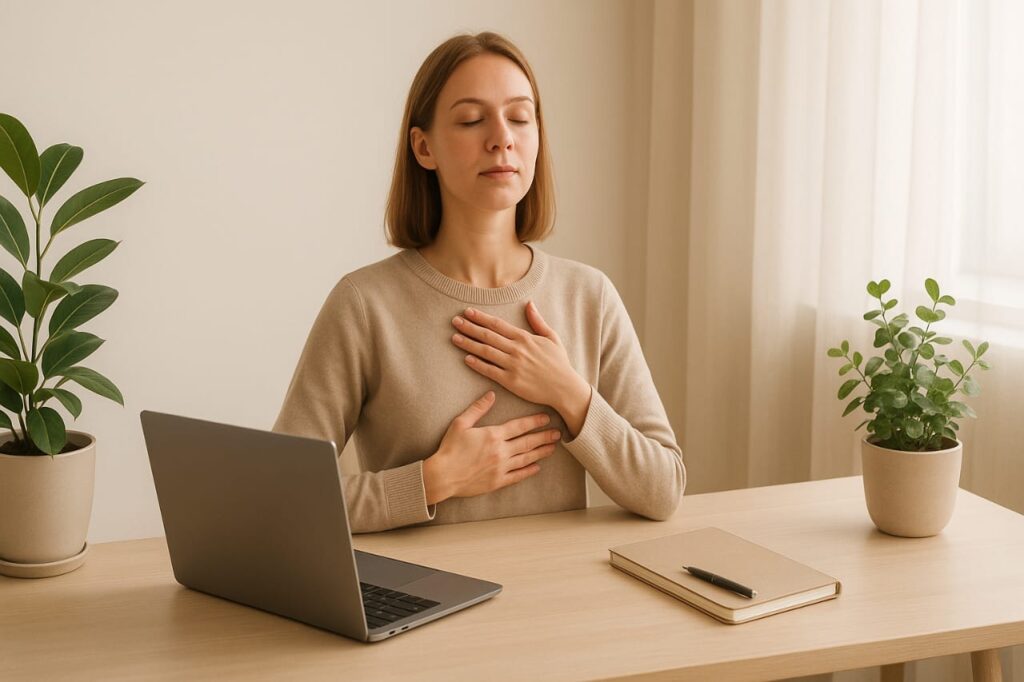
Encourage positive communication
Support team members
Listen to employee concerns
Distribute workload fairly
Offer flexible timing or hybrid work options
A happy employee is more productive and loyal.
7. Conclusion:Management of Work Stress
Work stress is a part of life, but with the right strategies, it can be managed effectively.
Understand your stress triggers, adopt healthy habits, practice mindfulness, and maintain balance.
Your mental health is your greatest strength—protect it.
Read this :-
- Yoga Asanas for Stress Relief
- Facebook page :- Dailylife99
FAQ:Management of Work Stress
Q1. What is the biggest cause of work stress?
Excessive workload, lack of balance, and toxic work culture are the major causes.
Q2. Can yoga really reduce work stress?
Yes, 10–15 minutes of yoga and meditation daily significantly reduces stress.
Q3. What should I do immediately when I feel stressed at work?
Take deep breaths, stretch, walk for a minute, and drink water.
Q4. Is digital detox necessary for reducing stress?
Yes, constant screen exposure increases mental exhaustion.
Q5. When does job stress become dangerous?
When it affects your sleep, health, relationships, and job performance.
Disclaimer :-
© DailyLife99 — The information provided here is for general purposes only. For any kind of health-related issue, please consult your specialist or doctor first. DailyLife99.com does not claim responsibility for any harm or consequences arising from the use of this information.